Widerstand der Gegenwart
Die unmittelbare Aktualität eines Geschehens, eine aus dem Zustand der Möglichkeit in den der Wirklichkeit überführte Handlung, stellt tatsächlich für die reflektierende Wahrnehmung eine ausnahmslose Überforderung dar. Der wirklich rätselhafte Zustand der Gegenwärtigkeit lässt unser Bewusstsein unausweichlich ins Leere greifen. Zur unmittelbaren Gegenwart eine erlebbare Distanz herzustellen ist nahezu unmöglich. Ein autonomer innerer Kern des Gegenwärtigen verweigert sich der kontrollierenden Steuerung durch das Wahrnehmungsvermögen. Das Veranschaulichte des Gegenwärtigen könnte manipulierend eine entfremdete Gegenwart erzeugen, welche vielleicht sogar imstand wäre, die Kraft ihrer bisher noch unangetasteten Lebendigkeit herabzusetzen.
Der Körper ist immer im Hier und Jetzt anwesend. Auch wenn er in der Lage ist, den Ort zu wechseln, das Haus zu verlassen, die Straße zu überqueren, kurz, sich bewegend der Illusion der Freiheit hinzugeben, ändert es an der Tatsache seiner Gebundenheit an sich selbst nichts. Und selbst die Wahrnehmung dieser Gebundenheit ist nicht neutral und deshalb auch nicht immer schmerzfrei, wenn das reflektierende Bewusstsein seine ausweglose Lage in und mit dem Körper zu existieren begreift. Der Körper zwingt die zeitliche und räumliche Schwerelosigkeit des Geistes aufs Neue in seine Ausgangsposition der Gegenwärtigkeit zurück. Bildlich gesprochen wäre es der Trägheits- oder Ruhepunkt, von dem sich das unruhige Bewusstsein wieder zu entfernen sucht. Dieser an die Gegenwart fixierte Körper kann nicht so ungezogen sein wie der Geist und sich durch eine Projektion aus der Affäre ziehen. Der Körper muss bleiben, er muss in der Gegenwart verharren.
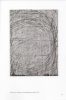
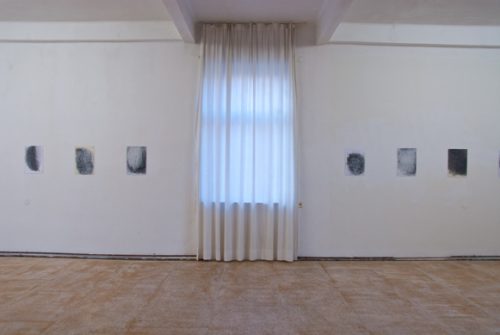
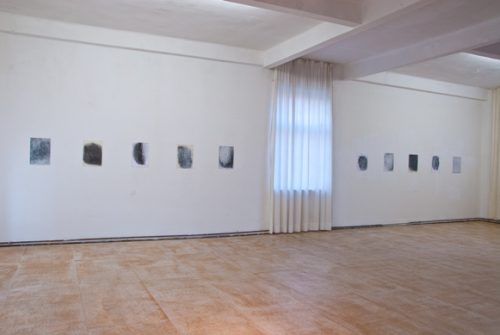
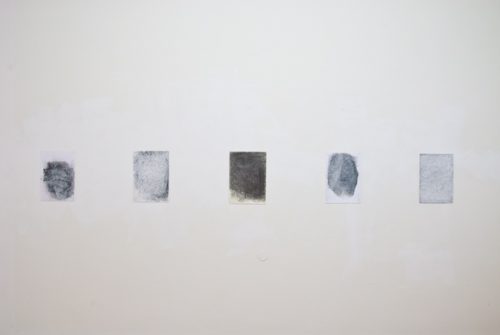
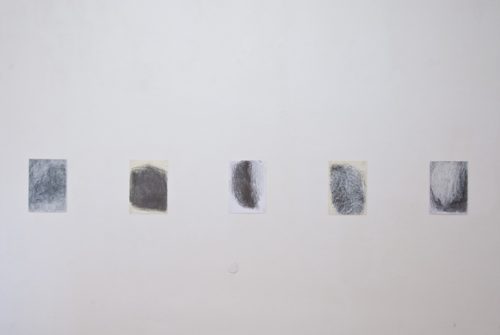
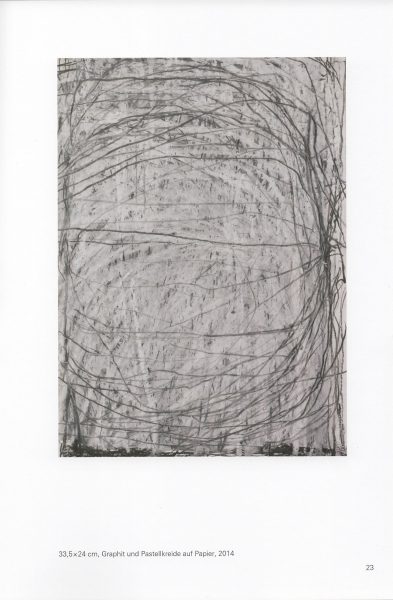
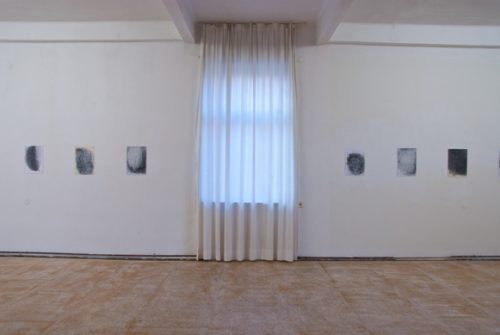
Striche, sichtbare, nachvollziehbare, lesbare Linien vermitteln noch über lange Zeiträume eine unverwechselbare und betroffen machende Präsenz ihrer selbst und folgerichtig – mal schemenhafter, mal konkreter – auch eine Vorstellung der dahinter stehenden Person. Im unmittelbar gezogenen, noch mehr im „verunglückten“ unvollständigen Strich, im noch nachfühlbaren Druck des Stiftes auf dem Papier wird ein aufmerksamer Betrachter dem Wiederaufleben der oder des Ausführenden noch einmal ansichtig. Die Zeit scheint an diesem Punkt stehen geblieben zu sein, und nicht das Abgebildete ist jetzt das Wirkliche, sondern die Abbildung. Alles Vergangene war einmal Gegenwart, und es trifft auch zu, dass es noch gegenwärtig ist. Es enthält einen Hinweis, der nicht nur Verweis der Vergangenheit auf die Gegenwart ist, sondern auch entgegengesetzt eine Mitteilung der tatsächlichen Gegenwart auf eine Welt, in der die Vergangenheit mit der Gegenwart simultan ist. Das Bild als simultanes zeitliches wie auch räumliches Gebilde dient der Persönlichkeit als Stempel, welcher den gegenwärtigen Abdruck seiner unmittelbaren Existenz dokumentiert.
Ein Strich ist sofort da, man kann ihn nicht machen, man soll ihn aus dem eigenen Rhythmus heraus annehmen.
Es ist eine Form des bedingungslosen Sich-Einlassens und der anhaltenden Verausgabung mit dem Ziel, das analytisch kontrollierende, Besitz ergreifende Denken aus der Bahn zu werfen. Angelehnt an das regellose Leben, welches ohne ersichtlichen Grund, ohne kalkulierte Sicherheit, ohne rechtfertigenden Vorwand agiert: ganz einfach Zeuge der Mächtigkeit des Augenblicks in seinem Wandel zu sein.
Karl Schleinkofer, (Katalogtext 2015)
-
-
-
-
-
 EPSON MFP image
 -
-

Weitere Informationen: Karl Schleinkofer
Resistance of the present
The immediate actuality of an event, an action transferred from the state of possibility into that of reality, actually represents for the reflecting perception an excessive demand without exception. The really puzzling condition of the presentness lets our consciousness inescapably reach into the void. To establish a tangible distance to the immediate present is almost impossible. An autonomous inner core of the present refuses to be controlled by the perceptive faculty. The visualized of the present could manipulatively produce an alienated present, which might even be able to diminish the power of its as yet untouched aliveness.
The body is always present in the here and now. Even if it is able to change the place, to leave the house, to cross the street, in short, to indulge in the illusion of freedom while moving, it does not change the fact of its bondage to itself. And even the perception of this bondage is not neutral and therefore not always painless, when the reflecting consciousness understands its hopeless situation to exist in and with the body. The body forces the temporal and spatial weightlessness of the spirit anew back into its starting position of the presentness. Figuratively speaking, it would be the point of inertia or rest from which the restless consciousness seeks to move away again. This body fixed to the present cannot be as naughty as the mind and get out of it by a projection. The body must remain, it must remain in the present.
Lines, visible, comprehensible, legible lines still convey over long periods of time an unmistakable and affecting presence of themselves and consequently – sometimes more shadowy, sometimes more concrete – also an idea of the person standing behind them. In the immediately drawn, even more in the „accidentally“ incomplete stroke, in the still perceptible pressure of the pen on the paper, an attentive observer once again becomes aware of the resurgence of the performer. Time seems to have stopped at this point, and it is not what is depicted that is real now, but the depiction. Everything past was once present, and it is also true that it is still present. It contains a reference that is not only a reference of the past to the present, but also, oppositely, a communication of the actual present to a world in which the past is simultaneous with the present. The picture as a simultaneous temporal as well as spatial structure serves the personality as a stamp, which documents the present imprint of its immediate existence.
A stroke is there immediately, one cannot make it, one is supposed to accept it out of one’s own rhythm.
It is a form of unconditional engagement and sustained expenditure with the aim of throwing analytically controlling, possessive thinking off track. Inspired by life without rules, which acts without any apparent reason, without calculated security, without any justifying pretext: simply to witness the power of the moment in its change.
Karl Schleinkofer, (catalog text 2015)
Further Information: Karl Schleinkofer